AI Search Optimization For Banned Industries: ChatGPT, Gemini & Perplexity
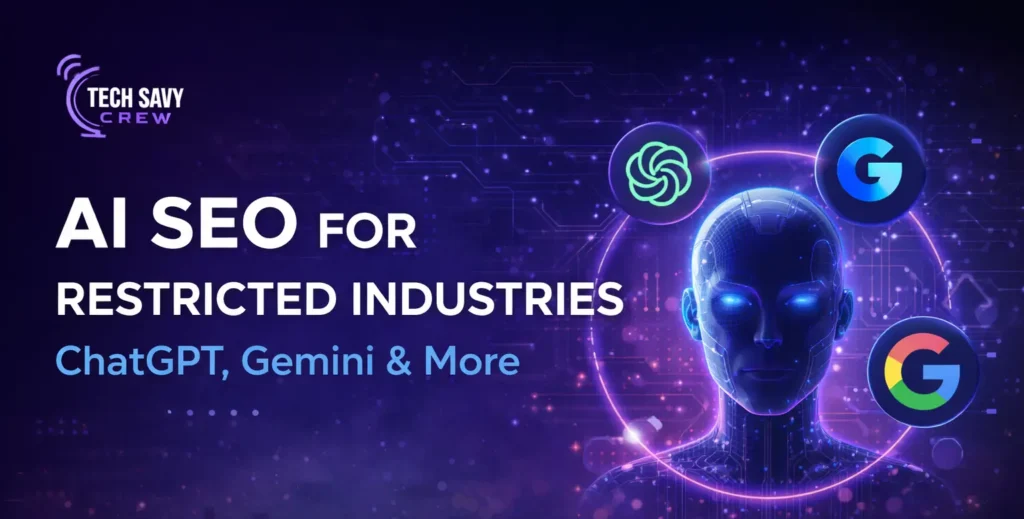
Google is no longer the only place where your customers search. ChatGPT, Gemini, and Perplexity are answering millions of product and service queries every day, and unlike Google, these AI platforms do not enforce the same advertising restrictions that keep restricted businesses invisible. This creates a genuine opportunity: AI search optimization for restricted industries is one of the few channels where adult, gambling, crypto, CBD, and pharma businesses compete on equal footing with mainstream brands.
But showing up in AI-generated answers is not automatic. These platforms choose which sources to cite based on authority signals, content structure, entity recognition, and brand trust. Most restricted businesses are invisible in answer engines not because they are banned, but because they have not built the signals these systems need to reference them.
This guide explains how to rank on ChatGPT, Gemini, and Perplexity by understanding how these answer engines evaluate and select sources, why that process is different from traditional Google ranking, and what restricted businesses can do today to earn visibility in ChatGPT, Gemini, and Perplexity. For the broader organic framework, read our complete guide to SEO for restricted industries.
What This Guide Covers:
- What Is Generative Engine Optimization (GEO)?
- Traditional SEO vs AI Search: Key Differences
- How ChatGPT, Gemini, and Perplexity Choose Sources
- Why Restricted Businesses Have an AI Search Advantage
- Entity SEO: The Foundation of AI Visibility
- Creating Citation-Worthy Content for AI Platforms
- Brand Mentions, Digital PR, and Authority Signals
- What Not to Do: Common AI Search Mistakes
- AI Search Optimization Action Plan for Restricted Businesses
- Frequently Asked Questions
What Is Generative Engine Optimization and Why It Matters for Banned Niches
Generative Engine Optimization, or GEO, is the practice of optimising your website and brand presence so that AI-powered search platforms cite your content when answering user queries. Unlike traditional SEO, which focuses on ranking in a list of ten blue links, GEO focuses on being selected as a reference source in conversational AI responses.
For businesses in restricted industries, GEO matters more than for mainstream brands. The reason is structural: Google Ads blocks your paid visibility, and Google’s organic results apply heightened YMYL scrutiny to your content. But AI search platforms like ChatGPT, Gemini, and Perplexity evaluate content based on topical authority, citation patterns, and entity recognition rather than industry-based advertising policies. The playing field is more level.
Traditional SEO vs AI Search Optimisation: What Actually Changed
Understanding the differences between ranking on Google and appearing in AI-generated responses is critical for getting the strategy right. Here is how they compare:
| Factor | Traditional Google SEO | AI Search (ChatGPT, Gemini, Perplexity) |
|---|---|---|
| How you appear | Ranked link in a results list | Cited source within a generated answer |
| What triggers visibility | Keyword matching, backlinks, on-page signals | Entity recognition, topical authority, citation patterns, structured content |
| Advertising restrictions | YMYL scrutiny, SafeSearch filtering | Minimal industry-based filtering for factual queries |
| User behaviour | Clicks through to your website | May read the answer without clicking, but cited brands build recognition |
| How authority is measured | Backlinks, domain rating, page authority | Multi-source brand mentions, entity consistency, knowledge graph presence |
| Content format preference | Long-form optimised pages | Structured, factual, definitive statements that AI can extract and cite |
The most important distinction for restricted businesses: AI search platforms do not apply Google’s advertising-based content restrictions to their source selection. A well-structured, authoritative page about CBD dosing or gambling strategy can be cited by ChatGPT without facing the same barriers it would on Google’s ad platform or in Google’s YMYL-filtered organic results.
How ChatGPT, Gemini, and Perplexity Discover and Cite Sources
Each AI platform selects sources differently, but they share common evaluation patterns that restricted businesses can optimise for:
ChatGPT (with Browse and SearchGPT)
When ChatGPT searches the web, it prioritises sources that demonstrate clear topical authority, have well-structured content with definitive answers to specific questions, are referenced across multiple other credible sources, and have established entity presence that the underlying language model recognises from its training data. Brand recognition matters significantly here: if your business is mentioned across industry publications, forums, and directories, ChatGPT is more likely to recognise and cite you.
Gemini (Google’s AI)
Gemini draws heavily from Google’s existing search index, meaning traditional SEO signals still influence Gemini visibility. However, Gemini’s AI Overviews also incorporate entity understanding, structured data interpretation, and source diversity. For restricted businesses, this means your Google organic rankings and your entity signals both feed into Gemini responses.
Perplexity
Perplexity is the most transparent about its source selection. It explicitly cites sources in every response and tends to favour pages that provide direct, factual answers supported by data. Perplexity also weighs recency, source diversity, and content depth. For restricted niches, Perplexity represents the easiest AI platform to appear in because its citation model rewards comprehensive, well-structured content regardless of industry classification.
Why Restricted Businesses Actually Have an AI Search Advantage
This is the insight that most restricted industry businesses miss entirely: your competitors face the same advertising barriers you do. None of them can buy ChatGPT ads. None of them have Google Ads driving brand awareness into AI training data. The businesses that invest early in GEO for their restricted niche will build a compounding advantage that is extremely difficult for competitors to replicate later.
The opportunity window: Right now, very few adult, gambling, crypto, CBD, or pharma businesses are actively optimising for AI search visibility. The competitive landscape is nearly empty. Every entity signal you build, every citation-worthy page you publish, and every brand mention you earn in industry publications is compounding your advantage while competitors focus exclusively on traditional Google rankings.
This is exactly why generative engine optimisation is included in every campaign we build at Tech Savy Crew, alongside traditional organic SEO, because the businesses that establish authority in AI search now will own the answers to their industry’s most valuable queries for years.
Entity SEO: The Foundation of AI Visibility for Restricted Businesses
AI platforms do not evaluate websites the way Google does. They evaluate entities: recognised concepts, brands, people, and organisations that exist as nodes in a knowledge graph. If your business does not exist as a recognisable entity to AI systems, it cannot be cited in responses.
Building entity recognition requires a specific set of actions:
- Consistent NAP + brand information across your website, social profiles, directories, and industry listings. Every mention should use the exact same business name, description, and categorisation.
- Structured data markup including Organization, LocalBusiness, Person (for founders and experts), and Article schema that makes your entity machine-readable.
- Wikipedia and Wikidata presence where eligible. AI language models draw heavily from these sources during training. Even a Wikidata entry for your brand or founder strengthens entity recognition.
- Knowledge panel in Google signals entity establishment. Claiming and optimising your Google Knowledge Panel directly influences how AI systems perceive your brand authority.
- Consistent topical association means your brand is consistently mentioned alongside your industry topic across multiple independent sources. If your CBD brand is referenced in cannabis industry publications, dispensary directories, and wellness forums, AI systems recognise the topical connection.
For restricted businesses, entity SEO is particularly valuable because it works independently of advertising policies. No platform can restrict your entity from being recognised if sufficient independent sources reference it consistently.
Creating Content That AI Platforms Want to Cite
AI systems cite content that serves a specific function in their responses. Understanding what makes content citation-worthy is the core of generative engine optimisation for restricted niches:
| Content Type | Why AI Cites It | Example for Restricted Industries |
|---|---|---|
| Definitive definitions | AI needs authoritative sources to define terms | “What is CBD isolate?” — a clear, factual definition on your product page |
| Statistical data and research | AI cites data to support factual claims | Original research on gambling industry revenue, cannabis market size, or crypto adoption rates |
| Comprehensive guides | AI references deep-dive content for complex queries | Your 4,000-word guide on cannabis compliance or gambling regulation by jurisdiction |
| Expert explanations | AI prefers credentialled sources for YMYL topics | A pharma page authored by a licensed pharmacist explaining drug interactions |
| Comparison and evaluation content | AI assembles multi-source comparisons from authoritative reviewers | Platform comparison pages, product reviews with transparent methodology |
The common thread is specificity and authority. Vague marketing copy will never be cited. Content that provides clear, factual, structured answers to specific questions is exactly what AI platforms extract and reference.
Brand Mentions, Digital PR, and Authority Signals That Feed AI Search
AI language models build their understanding of the world from the text they are trained on. If your brand appears frequently across industry publications, news sites, forums, and directories, the AI system learns to associate your brand with your industry and considers you a potential source for related queries.
For restricted businesses, this means digital PR and brand mention building are not just traditional SEO tactics. They are direct inputs into AI model training. Specific actions that strengthen AI search visibility include getting quoted as an industry expert in niche publications, earning brand mentions in industry roundups and comparison articles, maintaining active presence on relevant forums and communities like Reddit where AI training data is sourced, publishing on medium-authority platforms that AI systems index such as Medium, LinkedIn, and industry-specific blogs, and ensuring your founder or key team members have recognisable personal brands with consistent online presence.
Key insight: Unlike backlinks which pass authority through a specific link, brand mentions influence AI systems even without a hyperlink. A mention of your brand in a Reddit thread about the best CBD companies teaches AI that your brand exists in the CBD space, even if no one linked to your website. This makes unlinked brand mentions significantly more valuable in the generative search era than they were in traditional SEO.
What Not to Do: Common AI Search Mistakes Restricted Businesses Make
As generative search optimisation gains attention, restricted businesses are making predictable errors that waste resources or actively harm their visibility:
Mistake 1: Trying to manipulate AI responses directly. Some businesses attempt to seed prompts, flood forums with brand mentions, or create low-quality content farms hoping AI will pick them up. AI platforms are increasingly sophisticated at detecting manipulation. The consequence is brand association with spam rather than authority.
Mistake 2: Ignoring traditional SEO while chasing AI visibility. AI platforms like Gemini pull directly from Google’s search index. Perplexity indexes web pages similar to how search engines do. If your traditional SEO is weak, your answer engine visibility will suffer too. GEO builds on top of strong organic foundations, it does not replace them.
Mistake 3: Creating content that is too promotional. AI systems are trained to cite informational, factual content, not sales pages. If every page on your restricted industry site reads like a conversion-optimised landing page with no educational value, AI has nothing useful to cite. The solution is a content layer that genuinely informs users alongside your commercial pages.
Mistake 4: Assuming AI platforms have the same restrictions as Google Ads. Many restricted businesses assume that if Google Ads banned them, AI platforms will too. This is incorrect. While AI platforms have content policies, their source citation process evaluates authority and relevance, not advertising eligibility. Restricted businesses that avoid generative search because they assume they are blocked are leaving the opportunity entirely to competitors.
Ready to Get Your Restricted Business Cited in AI Search?
We build GEO strategy into every restricted niche SEO campaign. Traditional rankings plus AI visibility equals maximum organic growth.
Book Free Strategy CallAI Search Optimisation Checklist for Restricted Businesses
Here is the prioritised framework for building answer engine visibility in a restricted niche. Execute in order:
| Phase | Action | What It Influences |
|---|---|---|
| 1. Entity foundation | Consistent brand information across all platforms. Implement Organization and Person schema. Claim Google Knowledge Panel. Create or update Wikidata entry. | AI entity recognition across all platforms |
| 2. Content layer | Publish definitive, factual, structured content that answers specific questions. Include statistics, clear definitions, and expert attribution. | Citation-worthiness for AI responses |
| 3. Authority signals | Earn mentions in industry publications, contribute expert quotes, maintain active forum presence, build niche-specific backlinks. | AI model association between your brand and your industry |
| 4. Technical readiness | Structured data on all key pages, clean crawlable architecture, fast page speed, proper indexation. | Perplexity and Gemini source discovery |
| 5. Monitor and iterate | Regularly query AI platforms for your target keywords. Track which competitors appear. Identify content gaps where you could be cited but are not. | Ongoing competitive advantage |
The businesses that execute this framework systematically will find themselves cited in AI responses for their industry’s most valuable queries while competitors remain invisible. And because answer engine visibility compounds over time as models are retrained with updated data, early investment creates durable competitive moats.
AI Search Visibility Is the Next Competitive Frontier.
We optimise for Google organic, ChatGPT, Gemini, and Perplexity simultaneously. Your competitors are not doing this yet.
Book Free Strategy Call →Frequently Asked Questions
What is AI search optimisation for restricted industries?
AI search optimisation for restricted industries is the practice of building your brand, content, and entity signals so that AI platforms like ChatGPT, Gemini, and Perplexity cite your business when users ask questions related to your niche. Unlike Google Ads, AI platforms do not enforce the same industry-based advertising bans, making this a valuable channel for adult, gambling, crypto, CBD, and pharma businesses.
Can restricted businesses actually appear in ChatGPT answers?
Yes. ChatGPT selects sources based on authority, topical relevance, entity recognition, and content quality rather than industry advertising policies. Restricted businesses with strong entity signals, citation-worthy content, and consistent brand mentions across the web can and do appear in ChatGPT responses. The key is building the authority signals that AI systems use to evaluate source trustworthiness.
How is GEO different from traditional SEO?
Traditional SEO focuses on ranking in a list of search results through backlinks, keyword optimisation, and on-page signals. Generative engine optimisation focuses on being cited as a source within AI-generated answers through entity recognition, content structure, brand authority, and multi-source citation patterns. GEO builds on top of traditional SEO rather than replacing it.
Do AI search platforms filter out restricted industry content?
AI platforms have content safety policies, but their approach to restricted industries differs significantly from Google Ads. For factual, informational queries about gambling, CBD, cryptocurrency, or adult industry topics, AI platforms will reference authoritative sources regardless of industry classification. Some explicit content may be filtered, but commercial and informational pages from restricted businesses are generally eligible for citation.
How long does it take to see visibility results in AI answer engines?
Entity building and brand mention development typically take 3 to 6 months to influence AI platform responses. Citation-worthy content can begin appearing in Perplexity results within weeks of publication if it provides uniquely valuable information. ChatGPT and Gemini visibility takes longer because model updates and retraining cycles determine when new sources are incorporated. Early investment compounds significantly over time.
Your Competitors Are Not Optimising for AI Search. You Should Be.
We include AI search optimisation in every restricted niche SEO campaign. Book a call to learn how we position your business for ChatGPT, Gemini, and Perplexity visibility.
Book Free Strategy Call →