DeFi Marketing: Complete Promotion Guide for Decentralized Finance Projects (2026)
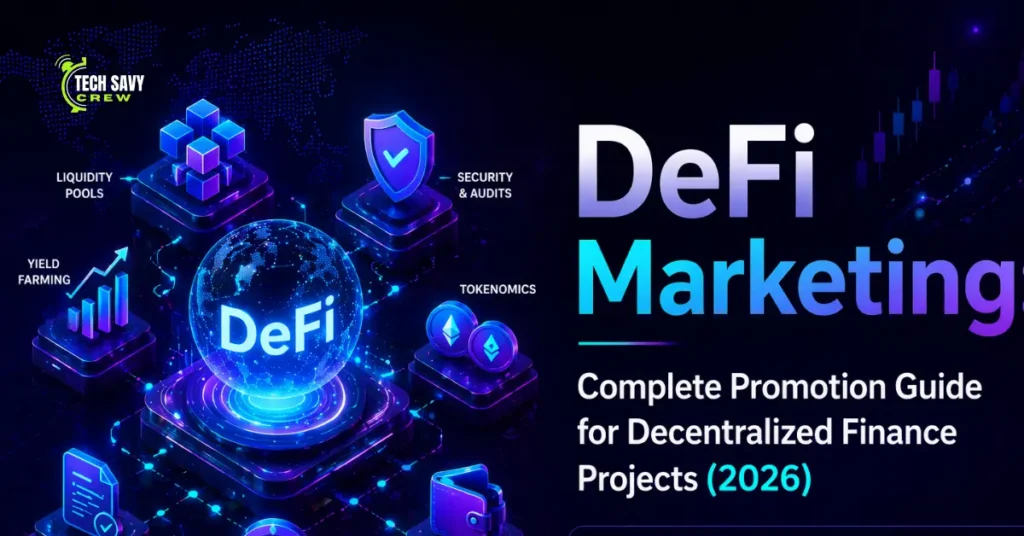
DeFi marketing is how decentralized finance projects attract users, build community trust and drive adoption for protocols that operate without traditional intermediaries. Unlike marketing a conventional fintech product where you can run Google Ads and Meta campaigns freely, defi marketing operates under severe advertising restrictions. Google restricts cryptocurrency promotion. Meta limits blockchain related ads. Twitter changed its crypto ad policies multiple times. These platform limitations mean that decentralized finance projects must rely on organic growth channels, community driven strategies and crypto native distribution methods to reach their target audience.
The decentralized finance market reached approximately 700 billion dollars in total value locked by late 2025 according to Grand View Research DeFi market analysis. That growth attracted thousands of competing protocols all fighting for the same pool of crypto native users, liquidity providers and institutional investors. The projects that win this competition are not necessarily the ones with the most innovative smart contracts. They are the ones that execute defi marketing strategies with precision, reaching the right audience through the right channels at the right moment in the user journey.
This guide covers every defi marketing channel, growth strategy, compliance consideration and measurement framework that matters for promoting decentralized finance projects effectively in 2026. The perspective here comes from building organic visibility for cryptocurrency and blockchain businesses in restricted industries where advertising bans make community building, search visibility and earned media channels disproportionately valuable compared to paid acquisition.
- 01What DeFi Marketing Actually Means
- 02Why DeFi Projects Need Specialized Marketing
- 03Marketing Channels That Work for DeFi
- 04Community Building as a Growth Engine
- 05SEO and Content Marketing for DeFi
- 06Influencer and KOL Partnerships
- 07PR and Media Distribution
- 08Token Launch and Airdrop Marketing
- 09Regulatory Compliance in DeFi Promotion
- 10Measuring DeFi Marketing Performance
- 11Final Thoughts
What DeFi Marketing Actually Means
DeFi marketing encompasses every promotional activity designed to attract users, liquidity providers and investors to decentralized finance protocols. This includes decentralized exchanges, lending and borrowing platforms, yield farming protocols, stablecoin issuers, decentralized asset management platforms, cross chain bridges and any financial application built on blockchain infrastructure that removes traditional intermediaries from financial transactions.
What separates defi marketing from traditional fintech marketing is the audience, the distribution channels and the trust model. DeFi users are crypto native individuals who evaluate projects based on smart contract security, tokenomics design, governance structure and community strength rather than brand recognition or advertising spend. They congregate on Twitter, Discord, Telegram, Reddit and crypto specific forums rather than on mainstream social platforms. And they trust pseudonymous developers with audited code more than they trust corporate brands with polished advertising campaigns.
The defi marketing landscape in 2026 has matured significantly from the speculative frenzy of earlier cycles. Users have become more sophisticated after experiencing rug pulls, governance attacks and protocol exploits. They conduct deeper due diligence before committing capital. This means that effective defi promotion marketing must prioritize transparency, education and demonstrable security over hype and promises of unsustainable yields. The projects that build lasting user bases are those that invest in genuine value communication rather than short term attention tactics.
A capable defi marketing agency understands these dynamics and builds strategies around the unique trust mechanics of the decentralized finance ecosystem. Generic digital marketing agencies that apply traditional playbooks to DeFi projects consistently underperform because they do not understand how crypto communities evaluate credibility, how token incentive structures affect user acquisition or how regulatory constraints limit promotional options across different jurisdictions.
Why DeFi Projects Need Specialized Marketing
The technical complexity of decentralized finance creates a communication challenge that most marketing teams are not equipped to handle. Explaining how an automated market maker works, why impermanent loss matters or how governance token distribution affects protocol decentralisation requires deep subject matter expertise. Marketing teams that lack this understanding produce content that either oversimplifies to the point of inaccuracy or fails to address the specific concerns that drive adoption decisions among experienced DeFi users.
Advertising restrictions create the most fundamental difference between defi marketing and conventional digital marketing. Google Ads restricts cryptocurrency promotion and requires certification that most DeFi projects cannot obtain. Meta platforms limit blockchain advertising. Even Twitter, which is more permissive with crypto content, has fluctuating policies that create uncertainty for paid campaigns. These restrictions mean that the entire customer acquisition model must be rebuilt around organic channels, community driven growth, earned media and crypto native advertising networks rather than the paid social and search advertising that drives most consumer technology marketing.
The competitive intensity in DeFi has also reached levels where undifferentiated projects simply cannot gain traction regardless of their technical merits. According to CoinGecko’s annual crypto industry report, there are now thousands of active DeFi protocols competing across lending, trading, yield generation and derivatives markets. Standing out in this environment requires a marketing approach that combines technical credibility with community engagement and strategic positioning in ways that generic marketing services cannot deliver.
How DeFi Users Discover New Protocols in 2026
% of Users Citing as Primary Discovery ChannelThe trust deficit in decentralized finance is another reason why specialised defi marketing services are essential. After high profile collapses and protocol exploits that cost users billions of dollars, the entire DeFi ecosystem carries a credibility burden that does not exist in most other technology sectors. Marketing strategies must actively address this trust deficit through transparency in communication, verifiable security audits, clear documentation of team credentials and consistent community engagement that demonstrates long term commitment rather than short term extraction.
Marketing Channels That Work for DeFi
DeFi marketing operates across a channel mix that looks fundamentally different from traditional digital marketing because the target audience consumes information through crypto native platforms rather than mainstream media channels. Understanding which channels deliver the highest quality users and the strongest long term retention for each type of DeFi protocol is critical for allocating marketing budget effectively.
The best defi marketing agencies combine multiple channels into a coordinated system rather than running isolated campaigns on individual platforms. A potential user who discovers your protocol through a Twitter thread, joins your Discord to ask technical questions, reads an in depth article on your blog and then sees a respected KOL discuss your security audit is far more likely to deposit capital than someone who only encounters a single banner advertisement on a crypto news site. Coordinated multi channel defi promotion marketing creates compounding trust signals that drive genuine adoption rather than temporary attention spikes.
Crypto Native Advertising Networks
While mainstream advertising platforms restrict DeFi promotion, several crypto native ad networks have emerged to fill the gap. Platforms like Coinzilla, Bitmedia, A-Ads and Cointraffic offer banner advertising, native content placement and pop under ads across networks of cryptocurrency websites, news portals and blockchain tools. These networks accept DeFi advertisers that mainstream platforms reject and deliver impressions to audiences that are already engaged with cryptocurrency content.
The effectiveness of crypto ad networks varies significantly by format and placement. Banner ads on general crypto news sites typically deliver high impression volume but low conversion quality. Native content placements within editorial environments perform better because they reach users during active reading sessions rather than passive browsing. Programmatic display through crypto specific demand side platforms offers the most precise targeting but requires sophisticated campaign management to avoid wasted spend on bot traffic and low intent impressions.
Community Building as a Growth Engine
Community is not just a marketing channel in decentralized finance. It is the foundation of the entire business model. DeFi protocols are governed by their token holders, developed through community proposals and sustained by users who provide liquidity and participate in governance. A DeFi project without an active community is a protocol without users, liquidity or governance participation. This makes community building the single most important defi marketing activity for any project that intends to survive beyond its initial launch phase.
Discord has become the primary community platform for DeFi projects because it supports the structured conversation, role based access and bot integration that complex crypto communities require. A well structured Discord server includes channels for general discussion, technical support, governance proposals, development updates, educational content and regional language communities. The quality of community management directly affects user retention because DeFi users evaluate a project’s legitimacy partly based on how responsive and knowledgeable the community team is when answering questions about smart contract mechanics, tokenomics or security measures.
Telegram serves a complementary role as a real time communication channel particularly popular in Asian and Eastern European crypto markets. Many DeFi projects maintain both Discord and Telegram communities because different geographic segments of the crypto audience have strong platform preferences. The key distinction is that Discord enables deeper structured conversation through its channel architecture while Telegram excels at rapid information distribution and real time market discussion. Both platforms require dedicated community managers who understand DeFi mechanics well enough to answer technical questions accurately and identify potential scam activity within the community.
Twitter remains the public facing layer of DeFi community building because it is where crypto conversations happen in the open and where new users first encounter projects before joining gated community channels. Building a strong Twitter presence requires consistent posting of valuable content including protocol updates, educational threads, market commentary and engagement with the broader crypto community. The projects that grow Twitter followings fastest are those that contribute genuine insight to ongoing conversations rather than simply broadcasting promotional messages about their own protocol. Working with a specialist crypto SEO agency can amplify the discoverability of this community content through search visibility that extends its reach beyond the Twitter timeline.
Community quality over quantity: A Discord server with 2,000 active users who participate in governance votes, submit bug reports and bring liquidity is infinitely more valuable than a Telegram group with 50,000 members who joined for an airdrop and never interact again. Effective defi marketing services focus on attracting committed users rather than inflating vanity metrics with inactive followers.
SEO and Content Marketing for DeFi
Search engine optimisation is the most underutilised channel in defi marketing despite the fact that it delivers the highest long term return on investment of any organic acquisition strategy. When a user searches for comparisons between lending protocols, explanations of yield farming strategies, reviews of specific DeFi platforms or tutorials on using decentralized exchanges, the content that ranks on page one of Google captures that user during a moment of active research and evaluation. No other defi marketing channel delivers this level of intent based targeting at zero marginal cost per visitor.
The reason most DeFi projects underinvest in SEO is the time horizon. Paid influencer campaigns deliver immediate visibility. Community events generate instant engagement spikes. Search visibility takes six to twelve months of consistent effort before delivering meaningful traffic. But the compounding nature of SEO means that a DeFi project that builds genuine search authority accumulates an asset that continues generating qualified traffic months and years after the initial content investment. This is particularly valuable in an industry where paid advertising options are restricted and community attention is increasingly fragmented across competing protocols.
Content marketing for DeFi projects should focus on three categories that map directly to the user journey. Educational content targets users who are learning about DeFi concepts and builds awareness of your protocol through helpful information rather than promotional claims. Comparison and evaluation content targets users who are actively deciding between competing protocols and positions your platform based on specific advantages. Technical documentation and integration guides target developers and power users who need detailed information to build on or deeply engage with your protocol.
Building topical authority around specific DeFi verticals is what separates protocols that capture meaningful search traffic from those that publish scattered content with no strategic focus. A lending protocol should build comprehensive content clusters around topics like lending rates, collateral requirements, liquidation mechanics, risk assessment and yield optimisation. This depth of coverage signals to Google that your domain has genuine expertise in decentralized lending, which translates into higher rankings across the entire topic cluster. Understanding how Google evaluates cryptocurrency content under YMYL and E-E-A-T quality standards is essential because all financial content including DeFi is held to the highest evidence and expertise requirements.
| Content Type | Target Audience | Search Intent | Conversion Goal |
|---|---|---|---|
| DeFi Explainers | Crypto beginners exploring DeFi | Informational (what is, how does) | Email signup, Discord join |
| Protocol Comparisons | Users evaluating alternatives | Commercial investigation | Platform trial, wallet connection |
| Yield Strategy Guides | Experienced DeFi users | Informational with transactional | Liquidity deposit, staking |
| Security Audit Reports | Investors and power users | Trust and verification | Capital commitment |
| Technical Documentation | Developers and integrators | Technical reference | Protocol integration, building on platform |
| Market Analysis | Traders and investors | Research and data | Platform engagement, repeat visits |
| Governance Proposals | Token holders and community | Participation and decision | Governance participation, retention |
SEO advantage for DeFi: Unlike paid advertising where cryptocurrency promotion faces platform restrictions that can change overnight, SEO operates without platform gatekeepers. A DeFi project can rank for any relevant query provided the content meets quality standards. This makes organic search the only scalable user acquisition channel that cannot be shut down by a third party advertising policy change. Specialised outreach strategies that generic marketing agencies typically lack are essential for building authority in crypto verticals.
Influencer and KOL Partnerships
Key opinion leaders and crypto influencers remain the fastest path to awareness in defi marketing because the DeFi audience trusts recommendations from respected community figures more than they trust branded messaging from protocols. A single thread from a well respected crypto analyst explaining why they are allocating capital to a specific DeFi protocol can drive more wallet connections than weeks of banner advertising. This makes influencer marketing one of the highest impact components of any comprehensive defi marketing strategy.
The crypto influencer ecosystem spans multiple tiers and platforms. Tier one influencers with audiences exceeding 500,000 followers on Twitter or YouTube deliver massive reach but command fees ranging from 10,000 to over 100,000 dollars per campaign. Tier two influencers with 50,000 to 500,000 followers offer a balance of reach and engagement that often delivers better cost per acquisition than tier one campaigns. Micro influencers with 5,000 to 50,000 followers in specific DeFi niches frequently deliver the highest conversion rates because their audiences are deeply engaged and trust their recommendations at a personal level.
The selection criteria for DeFi influencer partnerships should prioritize audience quality over audience size. An influencer with 30,000 followers who are active DeFi users with capital to deploy is more valuable than an influencer with 500,000 followers who are primarily interested in meme coins and speculation. Evaluating audience quality requires examining the influencer’s content history, the sophistication of their audience engagement, their track record with previous DeFi recommendations and whether their audience demographics align with your target user profile.
Structuring influencer campaigns for DeFi requires particular attention to authenticity because the crypto community is exceptionally skilled at identifying and punishing paid promotions that lack genuine conviction. The most effective influencer partnerships are those where the influencer actually uses the protocol, understands its mechanics and can speak to its advantages from personal experience. Campaigns that feel transactional or scripted generate backlash that damages both the influencer’s credibility and the protocol’s reputation within the community. The best defi marketing agencies maintain established relationships with vetted influencers whose values align with genuine DeFi adoption rather than short term promotional extraction. These agencies also understand that link building for restricted niches including DeFi requires niche specific outreach networks that mainstream marketing firms simply do not have access to.
DeFi Influencer Tiers: Reach vs Conversion Efficiency
Comparative AnalysisBuild Organic Visibility That DeFi Users Actually Trust
We help decentralized finance projects rank for the queries crypto users search when evaluating protocols.
Get Free DeFi Marketing AuditPR and Media Distribution
Crypto PR remains one of the most effective defi marketing channels because coverage in respected industry publications provides third party validation that no amount of self promotion can replicate. When CoinTelegraph, Decrypt, The Defiant, Blockworks or CoinDesk covers a DeFi protocol, that coverage signals credibility to potential users who are conducting due diligence before committing capital. Media coverage also generates backlinks from high authority domains that improve search rankings and creates content that can be referenced in community discussions and investor communications.
Effective crypto PR for DeFi projects requires understanding what makes a story newsworthy in the blockchain space. Protocol launches, significant TVL milestones, security audit completions, partnership announcements, governance votes with meaningful outcomes and novel technical innovations all represent legitimate news hooks. The key is framing these developments in ways that matter to the publication’s audience rather than submitting press releases that read like promotional advertisements. Journalists at crypto publications receive hundreds of pitches daily and the ones that get covered are those that tell a genuine story about innovation, user impact or market significance.
Press release distribution through crypto specific wire services like Chainwire, Bitcoin PR Buzz and GlobeNewswire’s blockchain vertical can amplify announcements across dozens of crypto news aggregators simultaneously. While individual placements on these syndication networks carry less weight than organic editorial coverage, they serve an important role in establishing a baseline of online presence and generating the initial backlinks that support broader SEO and content marketing efforts. A comprehensive defi marketing strategy typically combines targeted editorial pitching to top tier publications with broader syndication through wire services to maximise both credibility and coverage volume.
The timing of PR activity matters significantly in defi promotion marketing because crypto media attention follows market cycles. During bull markets, publications cover more DeFi stories and journalists are more receptive to protocol pitches because reader interest is high. During bear markets, media attention contracts and coverage tends to focus on institutional developments, regulatory changes and survival stories rather than new protocol launches. Aligning major announcements and PR pushes with market conditions that favour media receptivity is a nuance that experienced defi marketing agencies understand but generic PR firms typically miss. Understanding how to structure content for visibility across both traditional search and AI search engines ensures that PR driven content continues generating discovery value long after the initial news cycle.
Token Launch and Airdrop Marketing
Token launches represent the highest stakes moment in DeFi marketing because the initial distribution, pricing and community perception established during launch create momentum that is extremely difficult to reverse. A well executed token launch generates excitement, attracts liquidity and establishes a foundation of committed token holders who participate in governance and advocate for the protocol. A poorly executed launch creates selling pressure, community distrust and a negative narrative that can persist for years regardless of subsequent product improvements.
The marketing strategy for a DeFi token launch should begin months before the actual token generation event. Building community anticipation through progressive disclosure of tokenomics, governance structures and utility mechanics creates informed demand rather than speculative hype. Projects that reveal their token mechanics gradually while demonstrating protocol utility through a functioning product generate healthier launches than those that announce tokens before the underlying protocol has meaningful traction.
Airdrop campaigns remain one of the most powerful user acquisition tools in defi marketing because they align incentives between the protocol and its users. A well designed airdrop rewards users who have meaningfully engaged with the protocol through liquidity provision, governance participation, transaction volume or community contribution rather than distributing tokens to wallet addresses that completed trivial tasks through Sybil farms. The distinction between value creating airdrops and extractive airdrop farming determines whether the distribution creates lasting users or temporary mercenary capital that exits immediately after claiming.
Launchpad partnerships through platforms like Binance Launchpad, DAO Maker, Polkastarter and similar IDO platforms provide structured distribution channels that combine fundraising with marketing exposure. These platforms bring their existing user bases to your token sale, handle the technical infrastructure of distribution and provide a credibility endorsement through their vetting process. However, the terms and exclusivity requirements of launchpad partnerships vary significantly and must be evaluated against the marketing value they deliver relative to the equity or token allocation they require.
Airdrop design matters: The largest crypto airdrops in history demonstrate that distribution design directly determines outcomes. Airdrops that rewarded genuine protocol usage created communities of committed users who continued engaging after the distribution. Airdrops that used simple task based qualification attracted mercenary farmers who sold immediately, creating intense sell pressure and negative price action that damaged community sentiment. Every defi marketing strategy involving token distribution must account for this dynamic.
Regulatory Compliance in DeFi Promotion
Regulatory compliance is the most complex dimension of defi marketing because the legal frameworks governing cryptocurrency promotion vary dramatically across jurisdictions and continue evolving rapidly. What is permissible DeFi promotion in one country may constitute securities fraud in another. Projects that market globally without understanding these jurisdictional differences expose themselves to enforcement actions that can be existentially threatening.
In the United States, the SEC has taken an increasingly aggressive posture toward DeFi marketing that references tokens as investment opportunities. Marketing language that implies expected returns, describes tokens as investments or promotes yield generating activities without appropriate disclosures risks triggering securities law enforcement. The safest approach for US facing defi marketing is focusing on utility and technology narratives rather than investment return promises, clearly disclosing risks, avoiding guarantees of any kind and ensuring that all marketing materials have been reviewed by legal counsel with specific cryptocurrency regulatory expertise.
| Jurisdiction | Key Regulatory Body | Marketing Restrictions | Risk Level |
|---|---|---|---|
| United States | SEC, CFTC, FinCEN | Securities implications for token promotion, KYC/AML requirements, ban on misleading yield claims | Very High |
| European Union | ESMA (MiCA framework) | MiCA whitepaper requirements, disclosure obligations, restrictions on unregistered token promotion | High |
| United Kingdom | FCA | Financial promotions regime covers crypto, risk warnings mandatory, restrictions on incentive marketing | High |
| Singapore | MAS | Payment Services Act covers DeFi tokens, restrictions on public solicitation without licensing | Medium |
| Dubai / UAE | VARA | VARA licensing required for crypto marketing, specific rules for token promotion and advertising | Medium |
| Japan | FSA / JVCEA | Strict exchange registration, self-regulatory advertising guidelines, consumer protection requirements | High |
The European Union’s Markets in Crypto-Assets regulation establishes comprehensive requirements for DeFi marketing within the EU that came into full effect in 2024 and 2025. MiCA requires that all crypto asset marketing communications are clearly identifiable as such, are fair, clear and not misleading, and are consistent with information in required whitepapers. For DeFi projects marketing to EU audiences, MiCA compliance means that every promotional communication must include appropriate risk disclosures, avoid claims that cannot be substantiated and maintain consistency between marketing promises and actual product capabilities.
Advertising platform restrictions add a practical layer of compliance beyond legal requirements. Google requires specific certification for cryptocurrency advertisers and restricts promotion of DeFi protocols that do not meet its criteria. Meta platforms similarly restrict crypto advertising. These platform policies function as de facto regulatory requirements because violating them results in account suspension and loss of access to paid distribution channels. The practical effect is that most DeFi projects must build their marketing strategies primarily around organic channels that are not subject to platform advertising policies. Building visibility through SEO when banned from Google Ads is a strategy that has driven measurable results for cryptocurrency projects that cannot access paid search channels.
Smart contract audit marketing deserves specific attention because security audits have become one of the most important trust signals in DeFi. Promoting audit completion from respected firms like Certik, Trail of Bits, OpenZeppelin or Consensys Diligence provides credibility that no amount of marketing messaging can replicate. However, the marketing of audit results must be accurate and complete. Highlighting a clean audit while omitting findings or limitations constitutes misleading promotion. The most effective approach is full transparency about audit scope, findings and remediation actions, which builds genuine trust rather than superficial credibility.
Measuring DeFi Marketing Performance
Measuring defi marketing effectiveness requires metrics that reflect the unique economics of decentralized finance rather than borrowing measurement frameworks from traditional digital marketing. The metrics that matter most for DeFi protocols are fundamentally different from those used in SaaS, ecommerce or consumer technology marketing because the user relationship in DeFi revolves around capital commitment, liquidity provision and governance participation rather than subscription payments or product purchases.
Total value locked is the headline metric for most DeFi protocols because it represents the aggregate capital that users have committed to your smart contracts. TVL growth attributable to marketing activities provides the clearest signal of whether your defi marketing investment is translating into genuine protocol adoption. Tracking TVL changes in correlation with specific marketing campaigns, influencer partnerships, content publications and community events allows you to attribute capital inflows to the activities that generated them and optimise budget allocation accordingly.
Wallet connection and active user metrics provide a more granular view of marketing funnel performance. Tracking unique wallet connections, daily active addresses, transaction frequency per wallet and wallet retention over time reveals whether your marketing is attracting users who engage deeply with the protocol or users who connect once and never return. The distinction matters because DeFi protocol economics depend on sustained engagement rather than one time transactions. A protocol that acquires 10,000 wallets through an airdrop campaign but retains only 200 active users after 90 days has not achieved meaningful marketing success despite the impressive initial numbers.
Community health metrics including Discord daily active users, message volume, governance proposal participation rates, Twitter engagement rates and Telegram active member counts provide leading indicators of marketing effectiveness that precede on chain metrics. A decline in community engagement often predicts TVL decline before it appears in on chain data because users disengage from community channels before withdrawing capital. Monitoring community health metrics allows defi marketing teams to identify and address engagement problems before they translate into capital outflows.
| Metric Category | Key Metrics | Measurement Tool | Benchmark |
|---|---|---|---|
| On-Chain Adoption | TVL growth, unique wallets, daily active addresses, transaction volume | Dune Analytics, DefiLlama, Nansen | Consistent month over month growth |
| Community Health | Discord DAU, message volume, governance participation, Telegram active members | Discord analytics, Combot, Commonroom | 5 to 10% daily active rate |
| Content and SEO | Organic traffic, keyword rankings, backlinks earned, time on page | Google Search Console, Ahrefs, SEMrush | Month over month organic growth |
| Social Reach | Twitter impressions, engagement rate, follower growth, share of voice | Twitter Analytics, Brandwatch, Kaito | 3 to 5% engagement rate |
| Influencer ROI | Cost per wallet, cost per TVL dollar, attribution through referral links | UTM tracking, on-chain referral analysis | Positive ROI within 90 days |
| PR Impact | Media mentions, domain authority of coverage, referral traffic from press | Meltwater, Google Analytics, Ahrefs | Top tier coverage per quarter |
Attribution in DeFi marketing is inherently more complex than in traditional digital marketing because the conversion action (wallet connection and capital deposit) happens on chain rather than on your website. Connecting off chain marketing activities to on chain outcomes requires tracking infrastructure that bridges web analytics with blockchain data. Referral link tracking through UTM parameters can connect website visits to specific campaigns, but the gap between website visit and on chain action often involves multiple sessions across different devices and wallets. The most sophisticated DeFi marketing teams use tools like Nansen, Dune Analytics and custom attribution models to correlate marketing activities with on chain wallet behaviour, creating a complete picture of which marketing investments generate real protocol adoption.
Your DeFi Protocol Deserves Marketing That Understands Crypto
Every month without a structured marketing strategy is a month where competing protocols build the community, search authority and institutional credibility that become expensive to replicate.
Book Free Strategy CallFinal Thoughts
DeFi marketing in 2026 demands a fundamentally different approach than marketing in any other technology sector. The combination of advertising platform restrictions, a technically sophisticated audience, trust deficits from historical exploits and the unique economics of token based communities creates a marketing environment where conventional playbooks consistently fail. The projects that succeed are those that invest in building genuine community trust through transparency, education and consistent delivery on promises rather than those that chase short term attention through hype and unsustainable yield promotion.
The most effective defi marketing strategies combine organic growth channels including community building, SEO, content marketing and earned media with targeted acceleration through influencer partnerships, crypto native advertising and strategic PR. No single channel delivers everything a DeFi protocol needs. Community builds retention but lacks reach. SEO delivers qualified traffic but takes time to build. Influencers provide immediate visibility but require ongoing investment. PR generates credibility but depends on newsworthy developments. The protocols that grow sustainably are those that build integrated marketing systems where each channel reinforces the others and compounds over time.
Regulatory awareness must be woven into every aspect of defi promotion marketing rather than treated as an afterthought. The jurisdictional complexity of crypto regulation means that a marketing campaign that is perfectly legal in one market may violate securities law in another. The cost of regulatory non compliance in terms of enforcement actions, fines and reputational damage far exceeds the cost of proactive legal review. Every DeFi project should consider compliance infrastructure as a core marketing investment rather than an optional expense.
For DeFi projects that recognise the importance of building organic visibility and community trust but lack the in house expertise to execute across these specialised channels, partnering with a defi marketing agency that has deep crypto industry experience is the most capital efficient path to market. The difference between generic digital marketing services and specialised cryptocurrency marketing strategies is the difference between campaign structures that account for the unique mechanics of decentralized finance and those that apply templates from industries where the rules are entirely different.
The DeFi projects that will dominate their verticals over the next cycle are building their marketing foundations today. Community engagement, search authority, media relationships and influencer networks all take months to build but deliver compounding returns once established. The window for building these advantages before the next wave of mainstream DeFi adoption is narrowing. The projects that invest in structured defi marketing now will be the ones positioned to capture disproportionate user attention and capital when the broader market returns.